

Getting Started with Gouache : Supplies and materials Part One

Welcome to the Creative Crypt, I’m so happy you’re here!
I’m looking forward to diving in and starting with one of my greatest loves, gouache paints and watermedia! There is SO much to share here (so much!), and in turn, I had to reel it back and make a conscious attempt to break this down in a digestible way without throwing all the things at you at once.
I can’t overstate the importance of going slow, steady, and being easy on yourself as a beginner. I’ll break this info down for you in small, manageable chunks. Make a cozy space for yourself as your schedule allows, sit with your materials, play, experiment, and throw any and all rules and expectations out the window at first. We’re not looking to make masterpieces at this stage—we’re learning to work with our mediums and get a feel for them. This space is here to encourage play, make mistakes and discoveries, and get a sense of how these materials work and feel in our hands. The only thing you should be concerned with at this stage is PLAY.
For this first post, I will start with a brief overview of materials I recommend gathering as a beginner looking to work with gouache and selecting the supplies that will work best for your needs. There will be *several* subsequent posts diving deeper into various paints, brushes, papers, palettes, and the many extras you can get, but I felt it essential to keep it pretty simple at first. With so many options out there, it can be completely overwhelming to walk into an art store and peruse an art supply website. We wind up buying too much (or nothing at all), get colors or materials that we don’t use, or buy low-quality student-grade materials that are hard to work with and don’t last. This leads me to something I will always stress to all painters and artists…
Avoid student grade EVERYTHING. Why? Student-grade materials are an absolute waste of your money and waste of materials. Throw them out the window and never look back! You will be able to stretch high-quality materials farther (I promise, you’ll thank me later); good pigmented paints require you to use less product, they mix better, have a longer shelf life, contain high-quality ingredients, boost your results, and turn will make your life so much easier when learning. When I started my journey with gouache in art school, I *absolutely* couldn’t afford all the tubes and big shiny sets of paint. A few tubes at a time is all I could swing, but those tubes lasted, and I was able to add them to my paint library as time went on. More importantly, better paint helped me understand and learn how the medium truly worked, allowing me to better handle it. I really, really encourage you to do the same as a beginner. A handful of quality paints, good paper, and a couple of hard-working brushes are much more valuable than a massive set of 80-something student-grade colors and a pack of throw-away craft brushes in the long run.
The recommendations for this first section will include traditional and acrylic gouache and some basic supplies. In future posts, I’ll tackle specifics on each paint along with additional watercolors and acrylics, but let’s get started with these two for you first. Why am I including both traditional gouache and acrylics? For two reasons:
Both paints can be used together and/or separately. I use them both interchangeably on a daily and prefer having both on hand
I want to give both options to folks. Choose what you feel called to most, and I’ll give you the breakdowns below so you can weigh your options to fit your personal needs and preferences.
Let’s get you hooked up with the right paint!
I recommend smaller paint sets for beginners-less is more here! Yes, there are lots of convenience color options, they all rock and I encourage you to pick up those shiny, fun colors along the way to experiment with as you go! But for beginners and folks on a budget, buy less/smaller sets and higher quality at first. Know what you’re working with on a small scale before you overwhelm yourself with all the tubes. As you work with your paint set as a beginner, you’ll soon notice which colors your using more than others and this is key when building your color library and personal palette. Sets will always give you more bang for your buck and I’ll give you a few options below to fit different budgets. Over the years I’ve worked with pretty much every paint brand out there and will always recommend Holbein paints for beginners and professionals alike. I personally find their product ranges to be reliable, colors are always consistent and the product quality is high. After working with it for twenty years, I feel comfortable and confident recommending this paint to folks of all levels.

Traditional Gouache:
What is it and what the heck do I buy to get started?
Gouache paint is essentially an opaque watercolor that delivers a beautiful matte finish with amazing color payoff. It can be watered down like watercolor, applied in thin washes and layers and/or applied in thick layers depending on the look your trying to achieve and the technique you’re using. It dries slightly darker when completely dry on paper, I find it works best used straight from the tube and watered down to a buttermilk consistency (although you *can* use air tight palettes for traditional gouache, too-more on that in a later palette specific post!) This paint, much like watercolor paint, reactivates when rewetted or spritzed with water. Traditional gouache is primarily used on paper surfaces, like watercolor sheets, sketchbooks and WC blocks. If you’re looking to paint on variety of surfaces like primed panels, wood, canvas, vinyl toys and found objects, I would recommend picking up acrylic gouache and NOT traditional gouache. If you’re looking to just stick with painting on paper or watercolor panels, traditional gouache is the jam and delivers delicious color. However, I encourage you to read the acrylic gouache section below before making your decision to purchase to find what will be a good fit for you!
Below are a few traditional gouache paint options for different budgets, these can be purchased at most local art stores (try your mom and pop shops first, please!), Blick (dickblick.com) and Michaels (michaels.com). In addition to recommendations below, you might want to purchase a large tube (60 ml/2 oz) of Holbein Artists' Gouache Primary White or Titanium White to have on hand-you will be using it often and it goes lightening fast!
For beginners on a budget :
Holbein Artists' Gouache Set - Set of 12, 5 ml tubes
A fantastic set that includes basic core colors I use daily and recommend to beginners. You can mix what you need from this set (and if you have a couple of extra bucks to spare, pick up a tube of Burnt Umber and Magenta in addition when you’re able to). This 12 tube set is also available in larger tubes if you want to go big (15 ml /.5 oz). If you have the extra funds, would like to use them for larger works or plan on painting often, it’s always something you could pick up. But if you’re brand new and using for play at first, the smaller 5ml tubes are just fine.
For beginners with a few extra bucks to spare :
Holbein Artists' Gouache Set - Set of 18, 5 ml tubes
This set includes a few additional colors I like: Brilliant Orange, Raw Umber, Yellow Ochre, Leaf Green, Emerald Green and Magenta, It’s also available in a larger tube size option as well (15 ml /.5 oz). I truly don’t believe anyone needs more than what this set includes to get started as a beginner
For beginners who like convenience and have some extra dough burning in their pocket:
Holbein Artists' Gouache Set - Set of 24, 15 ml tubes
If you’re all in, have that money burning in your pocket and just want to invest in a set for the heck of it, I’m certainly not going to stop you. This set includes 24 larger (15 ml /.5 oz) tubes and lots of convenience colors. You truly do not need this many tubes as a beginner, as you can utilize most colors from the pervious sets to mix what you need. However, if you like the convenience of having colors ready to go, it’s a really brilliant set.
Additional Sets I like:
I’m not trying to be an enabler here, but as a paint junkie, I feel it’s important to share what I like and use. By no means do you need to pick up the paints mentioned below as a beginner, but I use them regularly for their unique color range and love them-they deserve a mention here. These paints can also be purchased à la carte by the tube-so if you have a few bucks to pick up a tube here and there, I definitely recommend them:
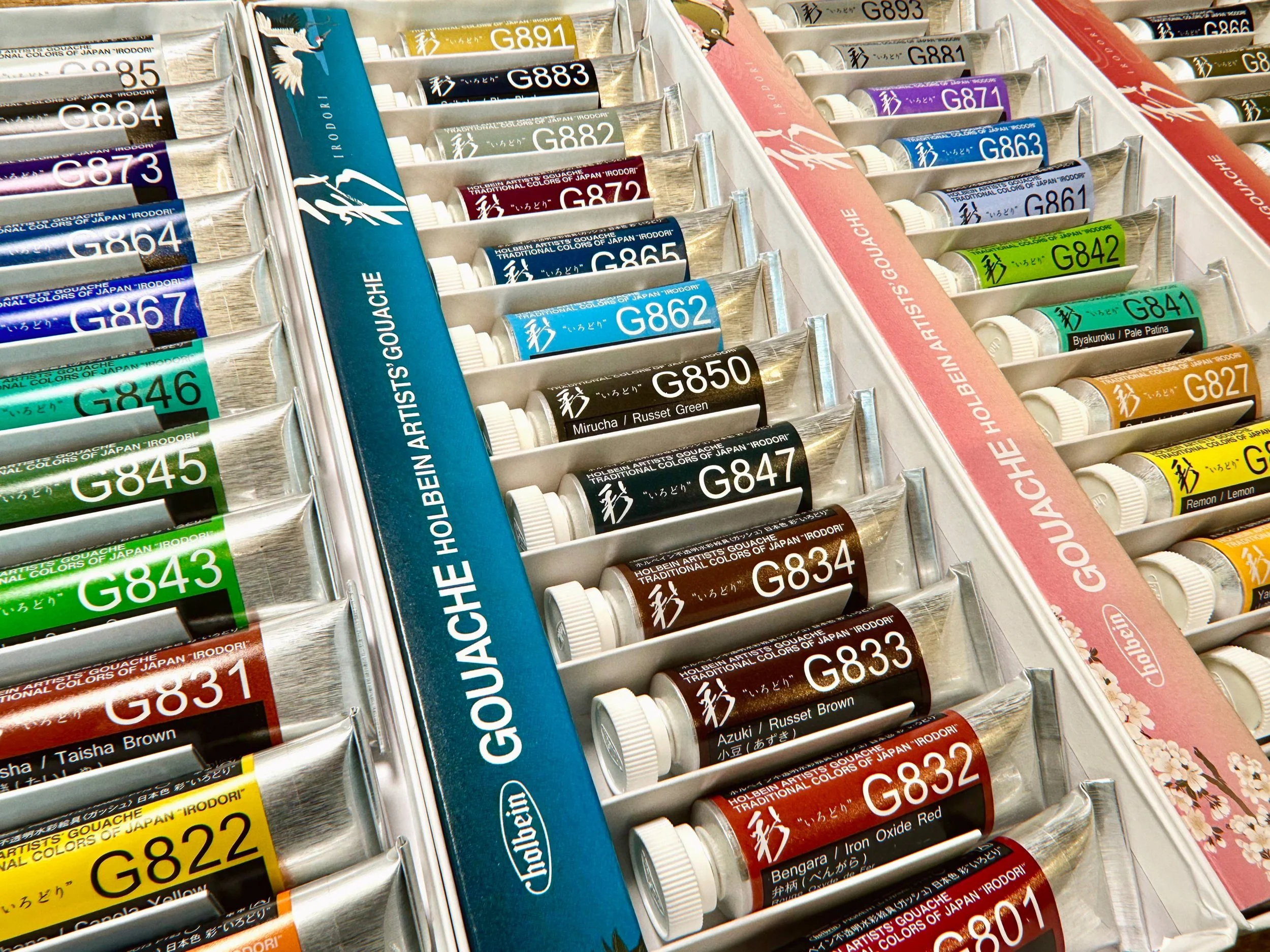
Holbein Irodori Artist Gouache and Sets
These paints are so special and SO gorgeous! This gouache paint series includes an incredible range of unique colors inspired by nature and the seasonal colors of Japan. The series is available in 12 tube sets broken down by the four seasons and also available by the tube. I love all four sets but personally tend to reach for the Autumn and Spring sets most often for my daily needs. If you’re buying by the tube and don’t know where to start, my advice would be to select colors you’re drawn to most. Pick what you like here! They’re all stunning and unique, perform beautifully and have become a fast favorite on my palette. Below is a short list of individual tube colors that have become convenience staples for me. Their unique color profile and ability to really stand out on my palette keeps me coming back to them:
Irodori Artist Gouache-Amur Cork Yellow
Irodori Artist Gouache-Myosotis Blue
Irodori Artist Gouache-Pale Coral
Irodori Artist Gouache-Pale Patina
Irodori Artist Gouache-Peony
Irodori Artist Gouache-Pine Tree Green
Irodori Artist Gouache-Smoked Bamboo
Acrylic Gouache: What is it and what the heck do I buy to get started?
Acrylic gouache paint is the magical love child of gouache and acrylic paint-the best of both worlds! Like traditional gouache, it can be watered down like watercolor, applied in thin washes and layers, and/or applied in thick layers, depending on the look you are trying to achieve. However, acrylic gouache does NOT reactivate when dry and rewetted or spritzed with water-much like all acrylics. This opens up lots of options if you’re looking to work on a variety of surfaces, plan to rework a painting, or add many, many layers to your work. Several folks have mentioned they’ve found acrylic gouache easier to work with when starting out with gouache. I can’t say the same, because I learned with traditional gouache first. It was my first love and I have found the color payoff to not be as delicious (but it is pretty darn delicious!). All that said, I absolutely love this stuff and use it in combination with gouache for daily work.
*A quick note about Acrylic Gouache: After trying almost every brand of acrylic gouache on the market, I only feel comfortable recommending Holbein Acryla Gouache to other artists. Several brands I’ve worked with in the past have resulted in mixed and poor results while working with on various surfaces. I’ve found problems like streakiness, poor pigment payoff, unfavorable consistency of paint, and color inconsistencies while working with other acrylic gouaches on the market. I have used Acryla on paper regularly alongside prepared wood surfaces, panels, canvas and even vinyl toys with excellent results each time. Again, my recommendations are based on my experiences with daily use for many years (and lots of experimentation!).
Below are a few Acrylic Gouache paint options for different budgets, these can be purchased at most local art stores, Blick (dickblick.com) and Michaels (michaels.com). In addition to recommendations below, you might want to purchase a large tube (40 ml/1.35 oz)) of Holbein Titanium White Acryla Gouache to have on hand-you will be using it often and it goes lightening fast! I also highly recommend Super Opaque White Acryla Gouache and Super Opaque Black Acryla Gouache. These specific Super Opaque paints are so highly pigmented, only a tiny bit is needed and it goes a long way!
For beginners on a budget:
Holbein Acrylic Designer Gouache - Set of 12, 12 ml Tubes
A fantastic set that includes basic core colors I use daily and recommend to beginners. You can mix what you need from this set (and if you have a couple of extra bucks to spare, pick up a tube of Burnt Umber and Magenta in addition when you’re able to). This set is also available in a larger 20 ml /0.68 oz tube size.
For beginners who like convenience and have some extra dough burning in their pocket:
Holbein Acrylic Designer Gouache - Set of 18, 12 ml Tubes
This set includes some beautiful additional colors for convenience. Again, not mandatory but convenient. I truly don’t believe anyone needs more than what this set includes to get started as a beginner and I would cap it off at 18 tube max. This set is also available in a larger 20 ml /0.68 oz tube size.
For beginners who like convenience and have some extra dough burning in their pocket:
Holbein Acryla Gouache - Assorted, Set of 24, 20 ml
If you’re all in, have that money burning in your pocket and want to invest in a set for the heck of it, I’m certainly not going to stop you. This set includes 24, 20 ml tubes and lots of convenience colors. You do not need this many tubes as a beginner, as you can utilize most colors from the previous sets to mix what you need. However, if you like the convenience of having colors ready to go, it’s a really brilliant set.
Additional things of note in regards to Acryla Gouache :
I fell fast and hard for these paints due to their versatility, and I cannot recommend them enough for folks who are looking for a matte acrylic gouache with fantastic layering ability. In addition, they make a great ground and I mix my traditional gouache with them to bump my color options in a pinch-something I’ll cover in the future. They’re also available in a nice, large tube size if you use them regularly or work on larger pieces/surfaces. Once the larger 40ml tubes became available, I started snapping them all up as I ran out of my smaller tubes, they go a long way.
Super Opaque Acryla Gouache: This stuff is pure magic in a tube! These paints were added to the range and boast incredible pigment and coverage. Currently, they’re available in black and white and I use them daily. They’re a little higher priced in comparison to the standard black and white offerings in the Acryla range, bit extremely concentrated and they can be really stretched due to that. I feel it’s worth the splurge!
Pastel Colors: This range includes several gorgeous pastel colors, if that’s your thing! They’re a convenient paint to have in your color library and not something mandatory for beginners. But I will say, once I started picking them up, I did fall for them quickly. I have tried them all but tend to reach for the Pale Lavender and Pale Mint often. These colors can be purchased individually or by the set.
Ahh! I’m still not sure which paint is best for me, how do I choose? Help!
It can be overwhelming, especially if you’ve never picked up gouache or paint before! When in doubt, drop everything and PLAY. Choosing YOUR paints (and eventually building your own personal color palette, more on that later!) is a highly personal choice and experience. If you’re on the fence and can’t decide between traditional gouache or acrylic gouache, pick up one of each tube, perhaps in black or a favorite color. Squeeze some out on a palette and put your brush to work on paper. Take note of the consistency and how it dries, which dried swatch sings to you? How does it feel when you mix a little water or water it down a lot to make washes? Play with line, strokes and gradients. Only you can decide what’s going to fit your artistic wants and needs-but if you’re really torn, take some time with these two paints to get a true feel for them. There’s no rush, work and decide at a pace that’s comfortable for you. Remember, we’re here to have fun and experiment!
* I plan to make individual posts on each medium in the future, so it’ll serve as a more in-depth resource for weighing your options moving forward!